The body on this island
Foot massage in Ibiza: the part of you doing all the work
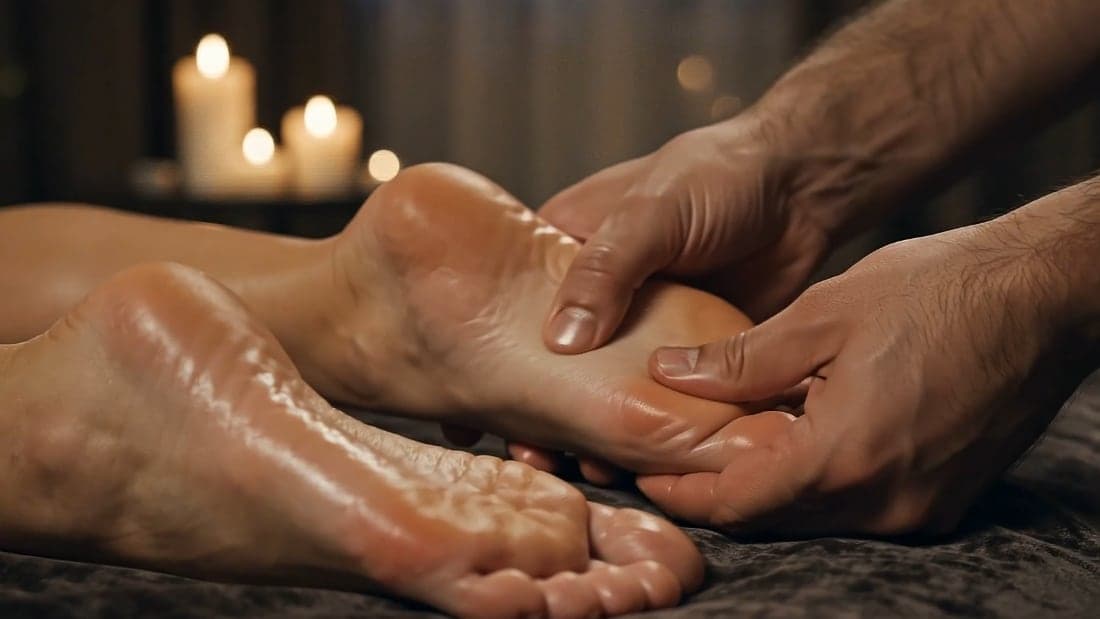
Nobody plans their holiday around their feet, and then the holiday happens to them. The walk from where the taxi could actually stop. Sand, which is never flat. Cala stones that turn every step into a small negotiation. The cobbles of Dalt Vila going up. Six hours upright in shoes that were chosen for a photograph. And salt, sun and heat swelling everything a size and a half by seven in the evening.
By the third or fourth day something aches, and it is usually not where you think.
What the island actually does to your feet
- Flat sandals and flip-flops. No arch support and nothing holding the heel, so the toes grip to keep the shoe on — for hours. That is a muscle working all day without being asked.
- Sand. It gives way under every step, so the calf and the small stabilising muscles of the foot work roughly twice as hard as they would on pavement. A beach day is a workout you did not know you did.
- Hot ground. You walk differently on burning sand or hot stone: shorter steps, more on the ball of the foot. Change the stride and everything above it changes too.
- Standing and dancing. Six hours barely moving from one spot is harder on a foot than six hours walking. The blood does not get pumped back up.
- Heels, and then bare feet. Going from a heel to a completely flat foot in the same night stretches the calf and the plantar fascia in ways neither expected.
- Heat and salt. You dehydrate, you retain, and by evening your feet are visibly bigger. Swollen tissue is stiffer tissue.
Why it does not stay in the feet
The foot is the bottom of a chain: plantar fascia, calf, hamstring, pelvis, lower back. Tighten the bottom and the whole line shortens. And because a sore foot is something you unconsciously avoid standing on, you start shifting your weight — a little more onto the other leg, a little more onto the outside edge. Two days of that and the ache has moved to one hip, one knee, or the lower back, and you blame the hotel mattress.
The tells are easy to read once you know them:
- The first steps in the morning hurt and then ease off — that is the plantar fascia, not the bed.
- Tight calves that feel short when you stretch.
- An ache on one side only — hip or knee. That is the compensation, not an injury.
- Lower back stiffness that appeared mid-holiday out of nowhere.
- Restless legs at night. Feet that spent the day swollen do not switch off just because you lay down.
What a proper foot massage actually does
Far more than the twenty minutes on a beach towel suggest. Done properly and slowly, it works on four things at once:
- It releases the plantar fascia, the sheet of tissue under the arch that tightens with every hour spent standing. This is what stops the painful first steps in the morning.
- It drains the swelling. Sustained pressure and long strokes towards the ankle move the fluid that gravity and heat parked there all day.
- It gives the ankle its range back, which sounds minor until you realise a stiff ankle is why the knee and the hip started aching.
- It resets your posture from the ground up. When the foot lands flat and takes weight evenly again, you stop compensating — and the hip, the knee and the lower back quietly stop complaining, without anybody touching them.
And then there is the other half of it
Everything above is the reason to book it. It is not why anyone remembers it.
The sole of the foot has one of the densest concentrations of nerve endings in the body — thousands of them in an area you can cover with one hand. It is also, for almost everyone, a part of the body that is essentially never touched with any attention. Shoes press it, floors punish it, and nothing else happens to it for years at a time.
So when warm oil and two thumbs work slowly along the arch, the response is disproportionate. People go quiet. Then there is a shiver that runs up the leg and lands somewhere in the spine, the shoulders drop, and the breath changes without any instruction. It is deeply, almost embarrassingly pleasurable — and in my experience it is also the most reliable way there is to put a nervous system to sleep. It is the least glamorous thing on the menu and the one that surprises people most.
The feet carry you all day and get thanked once a year. An hour of attention there is repaid immediately, and generously.
When it is worth it on this island
- After a full beach day. Sand, heat and swelling, all in one afternoon. This is the classic.
- Before you go out, not after. Feet that start the night loose survive the night far better than feet already complaining at midnight.
- The morning after the club. Six hours upright deserves more than a shower.
- The last day. Flying with swollen feet is its own small misery. An hour before checkout and you land home comfortable.
How to get one on this island
Fifteen minutes of it can be added to any of the rituals — the extension called Surrender, fifteen minutes spent entirely below the ankle, undoing inch by inch everything you have walked and danced across the island. You choose it when you book, and it costs 15 €. Minute for minute it is the part of the menu that gives back the most.
Everything happens in your own room, and it can be booked at short notice, often for the same day — choose your ritual and your hour. And if your week has been mostly beaches, walking and standing, say so when you book: I will spend longer down there, and more slowly.
If you would rather describe your week first and let me tell you what your body is actually asking for, write to me.
Services exclusively for adult women aged 18+, strictly by appointment. By booking you confirm you are over 18. A sacred, non-sexual space for deep relaxation and conscious touch.
← All the notes